
The Balance Between Psychological Safety and Performance
I recently had a conversation about a phrase I’m hearing more often from executives: “We just need to get on and do the work.”
It’s often said in response to conversations about psychological safety. And it’s worrying.
Because this mindset misses the point: psychological safety isn’t about avoiding work — it’s about creating the conditions where people can do their best work.
What Psychological Safety Is, and Isn’t
Amy Edmondson, who coined the term, defines psychological safety as “a shared belief that the team is safe for interpersonal risk-taking.” In practice, it means people feel comfortable asking questions, admitting mistakes, and challenging ideas without fear of ridicule or punishment.
But let’s be clear about what it isn’t:
It’s not a free pass to opt out of meaningful work.
It’s not about avoiding tough conversations.
It’s not about being “nice” all the time.
It’s about creating an environment where people can raise their hand if something is wrong, contribute ideas, and challenge assumptions - all in service of better performance.
Why This Matters
The research is clear: Google’s Project Aristotle found psychological safety was the number one factor in high-performing teams. McKinsey research shows teams with high psychological safety are up to 50% more productive.
On the flip side, the cost of ignoring it is rising. Safe Work Australia reports psychological health claims now make up around 9% of serious workers’ compensation claims. They are growing faster than physical claims, with an average cost of $45,000+ and nearly 7 months’ absence per claim.
Leaders who dismiss psychological safety not only risk underperformance. They risk legal and financial consequences.
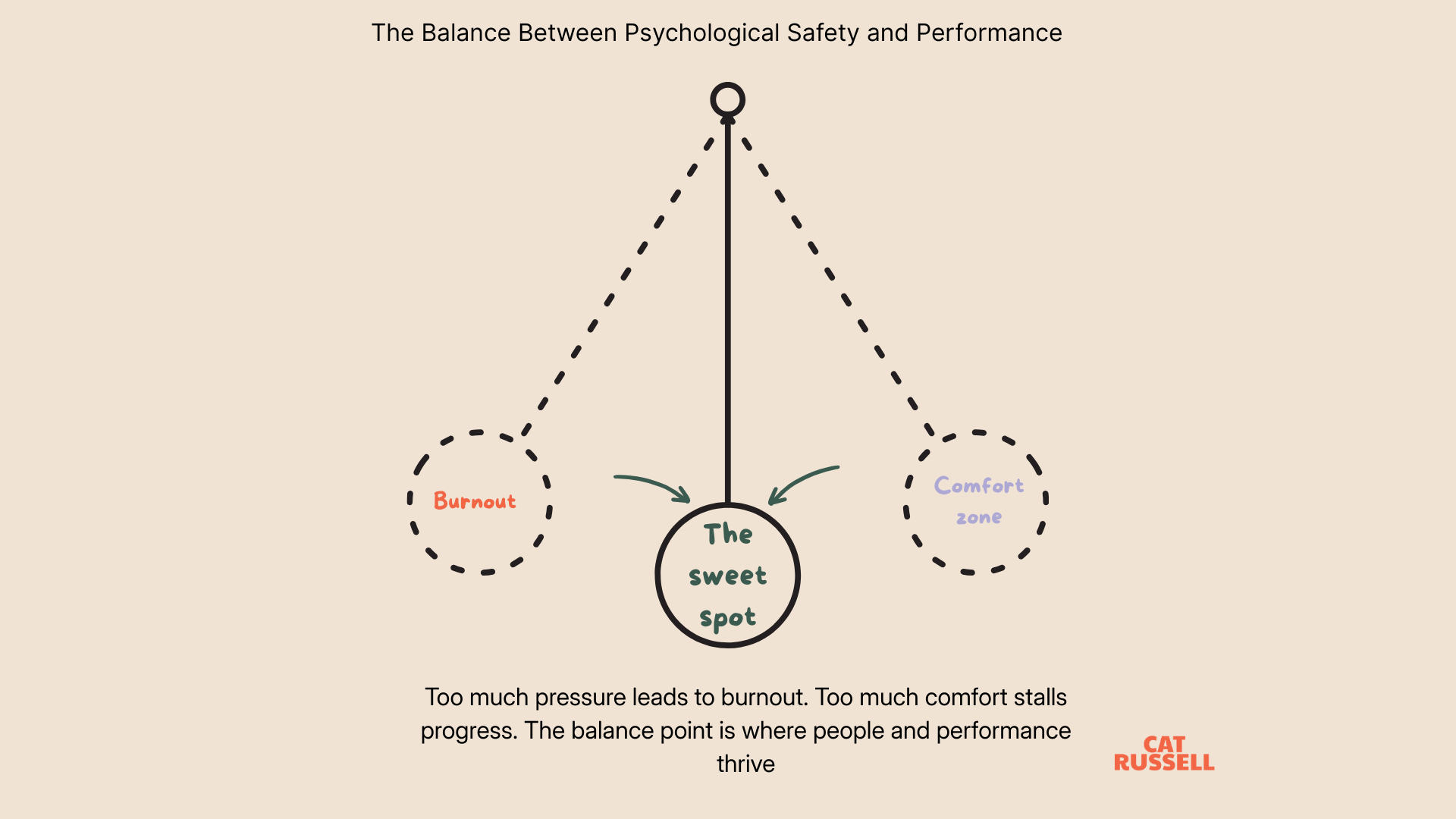
The Pendulum Problem
Some executives worry the pendulum has swung too far: that talk of psychological safety or wellbeing is an excuse to avoid accountability. “My energy is low today, so I’m taking the day off” gets conflated with psychological safety.
But they are not the same. Mental health and wellbeing are vital, but psychological safety is about the work system itself. It’s about whether people feel safe to speak up, take risks, and contribute.
Organisations have a responsibility, backed by workplace health and safety laws, to provide a safe environment. Employees have a responsibility to show up and do meaningful work. The balance is both/and, not either/or.
Hard Work vs. Wasted Work
There’s nothing wrong with hard work. In fact, when it’s meaningful, hard work is energising. What drains people isn’t effort, it’s wasted work: long packs nobody reads, meetings without purpose, approval chains that stall progress, or reports created for compliance rather than clarity.
Psychological safety helps leaders have the conversations that cut waste, focus on what matters, and keep performance high.
Testing and Building Psychological Safety
Psychological safety isn’t abstract. You can measure it, test it, and improve it. I use a range of ways to do this. Here’s one simple tool you can download to get started.
Practical ways to build psychological safety include:
Creating systems and routines that support open dialogue.
Being explicit about what needs to be done and why.
Modelling respect - listening, acknowledging, and inviting challenge.
When leaders get this balance right, they unlock the collective intelligence of their team. People contribute more, waste less, and perform better.
The Bottom Line
We are in business to deliver results. Let’s not lose sight of that.
But results come faster, and last longer, when people feel safe to contribute, challenge, and learn. Psychological safety isn’t a “soft” idea. It’s a performance strategy.
Let’s get the balance right: safe spaces where people thrive, and meaningful work that drives organisations forward.
Is your pendulum stUck in the burnout or comfort zone?
If this resonates, let’s talk. Building psychological safety into the way work gets done is something I’m deeply passionate about, and it’s where performance really lifts.